
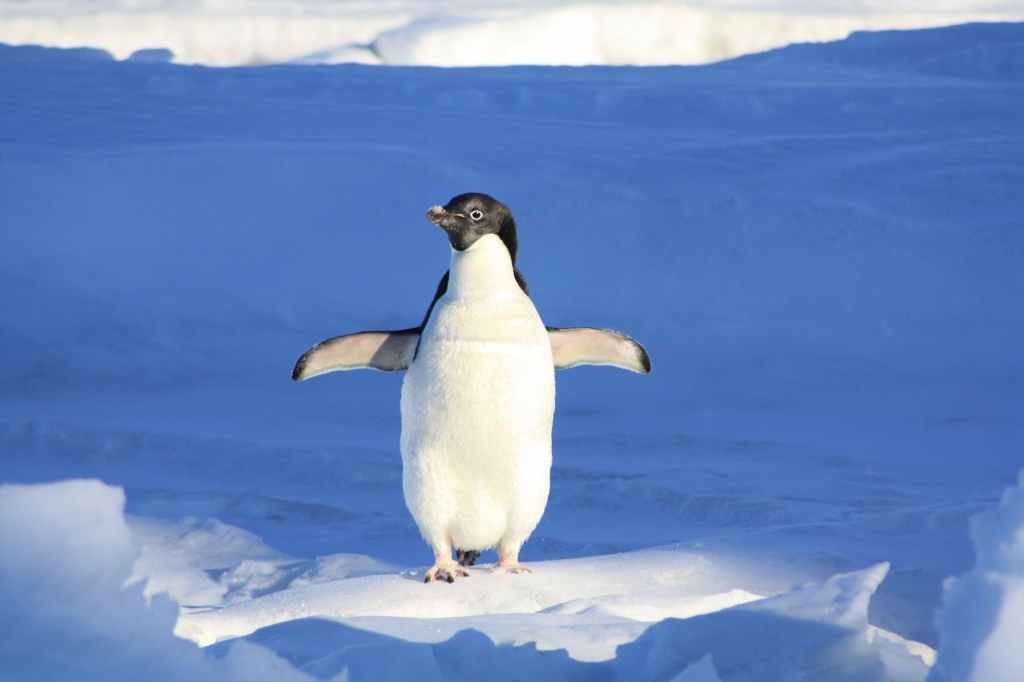
Penguins are a group of flightless birds that are highly adapted to life in the water. They are well-known for their distinctive appearance, with a streamlined body, flipper-like wings, and a characteristic waddling gait on land. Here are some key facts about penguins:
- Habitat:
- Penguins are found primarily in the Southern Hemisphere, although some species inhabit more temperate or even sub-Antarctic regions. Species like the Emperor Penguin and Adélie Penguin are well-adapted to the extreme conditions of Antarctica.
- Species:
- There are several species of penguins, each with its own characteristics and adaptations. Some well-known species include the Emperor Penguin, King Penguin, Adélie Penguin, Gentoo Penguin, Chinstrap Penguin, and Magellanic Penguin, among others.
- Adaptations for Swimming:
- Penguins have evolved to be exceptional swimmers. Their wings have evolved into flippers for efficient propulsion through the water.
- Their bodies are streamlined, and they use their webbed feet for steering while swimming.
- Diet:
- Penguins are carnivorous and primarily feed on fish, squid, and krill. They are skilled hunters and can dive to considerable depths in search of prey.
- Nesting and Breeding:
- Penguins are known for their unique nesting and breeding behaviors. Many species form large breeding colonies, where they gather to mate, lay eggs, and raise their chicks.
- Emperor Penguins, for example, are known for their synchronized breeding cycle, where they huddle together to protect their eggs from the harsh Antarctic conditions.
- Communication:
- Penguins communicate with each other through vocalizations, body movements, and displays. Different species may have distinct calls that serve various purposes, including mate recognition and communication within colonies.
- Threats and Conservation:
- Penguins face various threats, including climate change, overfishing, and habitat destruction. Some species are classified as endangered or vulnerable.
- Conservation efforts focus on protecting their breeding and feeding grounds, as well as addressing the broader environmental challenges they face.
- Not All Penguins Live in Cold Climates:
- While many people associate penguins with icy habitats, some species, such as the Galápagos Penguin, live near the equator. These penguins have adapted to warmer conditions.
Penguins are charismatic and well-loved birds, known for their entertaining behaviors both in and out of the water. They have become symbolic of the challenges and adaptations required for survival in diverse and often harsh environments.
Hena’s Blog For Paws © 2019 by Hena Osman is licensed under CC BY 4.0
 Hena's Blog For Paws
Leave a comment