
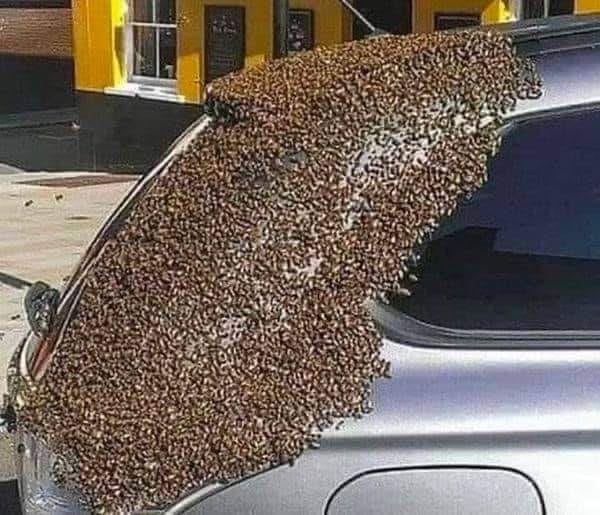
When you see bees gathered together at a single place, just don’t panic and always remember that these bees are in hibernating mode because, they are taking a break of atleast 24 hours to grab the energy and leave. Don’t call firefighters or civil protection, don’t move them, don’t poison, don’t kill them either.
It is called bees traveling. If you need to help them then this is what you can do:
- Place a flat plate or a flat container with a light layer of sugar water. Watch them feed, grab energy, and go their way.
We all must protect the traveling swarms. Bees are our survival need, If bees die, we die later. Without bees, no human being will remain on the face of the Earth.
- Pollination: Bees, along with other pollinators, play a vital role in pollinating plants. This process is essential for the reproduction of many fruits, vegetables, nuts, and other crops that make up a significant portion of the human diet. Without bees, the production of these crops would be severely diminished, leading to food shortages and increased food prices.
- Agricultural productivity: Many commercial crops, including apples, almonds, blueberries, and various types of vegetables, rely on bee pollination to yield abundant harvests. The economic value of these crops is substantial, contributing significantly to the global food supply and agricultural industry.
- Biodiversity and ecosystems: Bees are an integral part of diverse ecosystems. They help in the pollination of native plants, which, in turn, support a wide range of wildlife and provide habitat for other species. Bees also contribute to the overall health and resilience of ecosystems by ensuring genetic diversity within plant populations.
- Medicinal plants and natural resources: Bees play a role in pollinating medicinal plants and various species used for natural resources, such as timber and fibers. This has implications for traditional and modern medicine, as well as for industries relying on these resources.
- Honey production: Bees produce honey, which is a valuable food source for humans. Honey has been used for its nutritional and medicinal properties for centuries.
- Supporting rural livelihoods: Beekeeping and the production of bee-related products, such as honey and beeswax, provide livelihood opportunities for many people in rural communities. It is an important source of income and helps promote sustainable practices.
- Ecosystem services: Bees contribute to ecosystem services by helping maintain healthy ecosystems. These services include soil fertility, water purification, and nutrient cycling, which are important for agriculture and the environment.
- Genetic diversity and adaptation: Bees help in maintaining genetic diversity within plant populations by facilitating cross-pollination. This genetic diversity is crucial for adaptation to changing environmental conditions and the development of new crop varieties.
In recent years, there has been growing concern about the decline in bee populations due to factors like habitat loss, pesticide use, climate change, and disease. Efforts to protect and conserve bee populations are essential to ensure the continued provision of these valuable ecosystem services and benefits to mankind.
Hena’s Blog For Paws © 2019 by Hena Osman is licensed under CC BY 4.0
 Hena's Blog For Paws
Leave a comment