
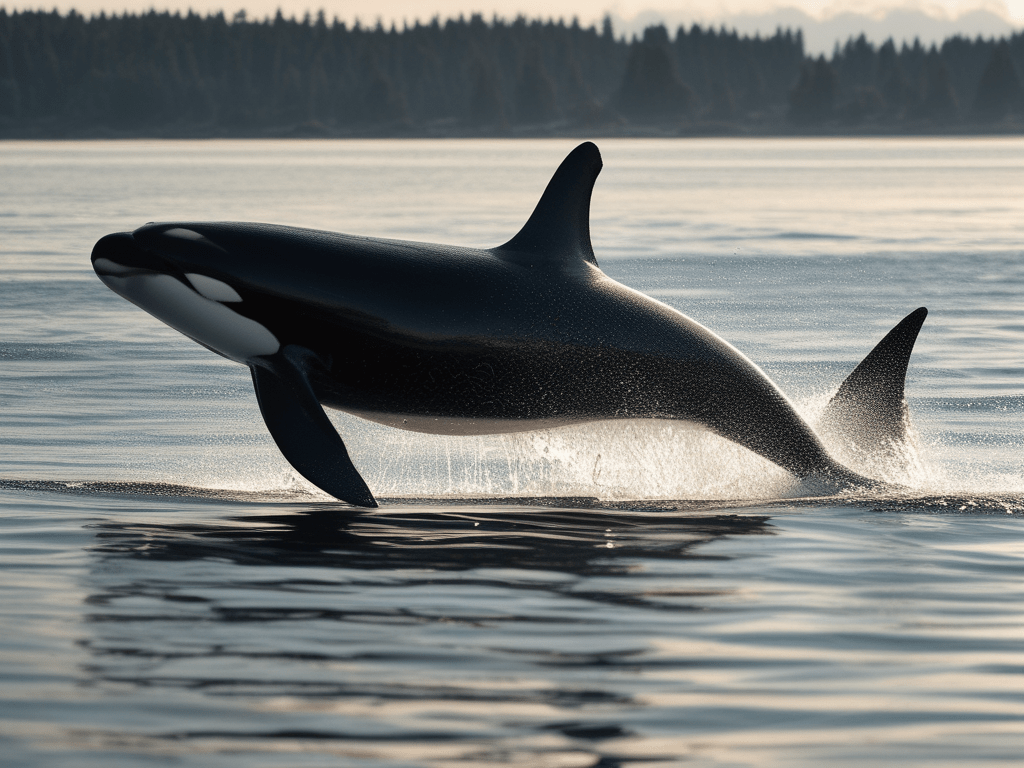
Orcas, also known as killer whales, are one of the ocean’s most formidable and intelligent predators. The moniker “killer whale” can be traced back to the 18th century, where sailors and whalers observed these creatures hunting large whales. The term “killer” was a reference to their prowess and efficiency as hunters, not because they posed a direct threat to humans.
Historical Observations
The first accounts of orcas being referred to as “killer whales” come from Spanish sailors who called them “asesina ballenas,” meaning “whale killers.” This term was eventually reversed in English to “killer whale.” Orcas were observed attacking and killing other large whale species, including blue whales and humpback whales, which are significantly larger than orcas themselves. This ability to take down such large prey astonished sailors and led to the perception of orcas as formidable and fearsome predators.
Predatory Skills and Techniques
Orcas are apex predators, meaning they are at the top of the food chain with no natural predators. Their diet is diverse and includes fish, seals, sea birds, and even larger whales. Orcas are known for their sophisticated hunting techniques and social structures. They often hunt in pods, using coordinated strategies to capture prey. Some pods specialize in hunting particular types of prey, such as fish-eating orcas that primarily consume salmon, while others target marine mammals like seals and whales.
Their hunting strategies are both diverse and ingenious. For instance, orcas will beach themselves temporarily to catch seals resting on ice floes, a risky maneuver that demonstrates their intelligence and adaptability. They also employ a technique called “wave-washing,” where they create waves to knock seals off ice floes into the water, making them easier to catch. In groups, orcas can work together to create confusion and panic among schools of fish, corralling them into tight balls for easier capture.
Intelligence and Social Structure
Orcas are highly intelligent creatures with complex social structures. They live in matrilineal pods, meaning that the social group is organized around the female lineage. These pods can consist of anywhere from a few individuals to over fifty, depending on the availability of food and other environmental factors. Within these pods, orcas display strong family bonds and often engage in cooperative care of young.
Communication is a key aspect of orca society. They use a variety of vocalizations, including clicks, whistles, and pulsed calls, to communicate with one another. Each pod has its own distinct set of vocalizations, which function much like a dialect. This level of social complexity and communication is rare in the animal kingdom and further underscores the intelligence of these animals.
Human Interaction and Perception
Despite their fearsome reputation, orcas very rarely attack humans. In the wild, there have been few documented cases of orcas attacking humans, and these incidents are often attributed to curiosity or mistaken identity rather than aggression. In captivity, however, there have been instances where orcas have injured or killed their trainers. These incidents are believed to result from the stress and unnatural living conditions imposed by captivity.
In conclusion, orcas are known as killer whales due to their exceptional hunting abilities and the historical observations of them preying on large whales. Their intelligence, complex social structures, and diverse hunting techniques contribute to their status as one of the ocean’s most formidable predators. While they are formidable hunters, their interactions with humans are generally non-threatening, further emphasizing the nuanced nature of their “killer” reputation.
Hena’s Blog For Paws © 2019 by Hena Osman is licensed under CC BY 4.0
 Hena's Blog For Paws
Leave a comment