
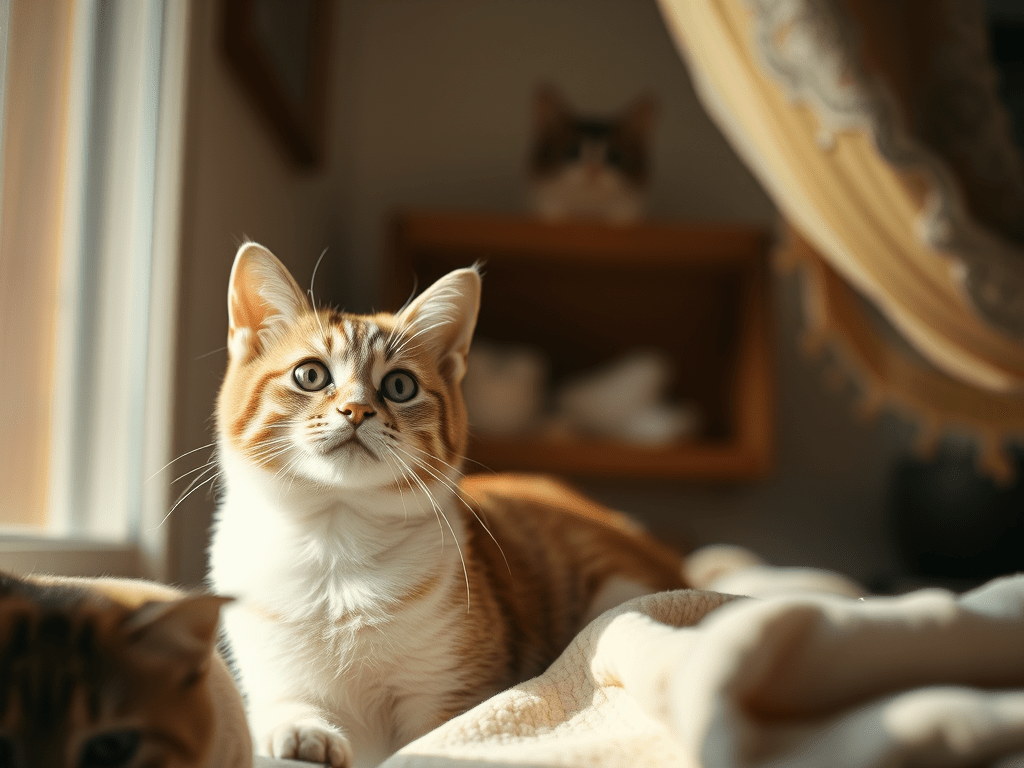
According to Islam, cats are considered pure animals, and they are allowed to stay in the house. Islamic teachings highlight the significance of treating animals, especially cats, with kindness and respect. Cats hold a special place in Islamic tradition, and they are regarded as clean animals, which is why they are permissible to keep as pets within the home.
Evidence from the Hadith:
Several Hadiths (narrations of the sayings and actions of Prophet Muhammad, peace be upon him) reflect this position. One of the most famous accounts is that of Abu Hurairah, a companion of the Prophet, whose name means “Father of the Kitten” because of his love for cats. He was often seen caring for cats, which further illustrates the positive attitude toward cats in early Islamic history.
A well-known Hadith about cats states:
“Cats do not invalidate a prayer, because they are from the things that are useful in the house.”
(Sunan Ibn Majah, 367)
This indicates that cats are considered ritually pure and do not negatively affect a person’s prayer or cleanliness, unlike other animals that might be considered impure in certain circumstances.
Cats and Cleanliness:
Islam places a high value on cleanliness, both spiritual and physical, and cats are seen as clean creatures. Prophet Muhammad (PBUH) himself made it clear that there is no harm in cats touching humans or their belongings. According to one narration, the Prophet (PBUH) said:
“They (cats) are not impure; they are among the animals that frequently wander around you.”
(Sunan Abu Dawood, 76)
This statement reflects the belief that cats do not carry impurities, and their presence does not require additional cleanliness measures, such as when they drink from a bowl or touch prayer mats.
Story of the Prophet’s Compassion for Cats:
There is a famous story that demonstrates the Prophet Muhammad’s (PBUH) compassion toward cats. One day, while preparing for prayer, a cat was found sleeping on the Prophet’s (PBUH) robe. Instead of disturbing the animal, he gently cut off the part of his robe on which the cat was resting so that he could leave without waking or distressing the cat. This incident is often cited as an example of the Prophet’s mercy and kindness toward animals, especially cats.
Cats and the Household:
Cats are allowed to roam freely in a Muslim household, and it is encouraged to take care of them by feeding, providing water, and showing kindness. The permissibility of having cats at home is emphasized in the fact that they are viewed as clean animals, making it acceptable for them to be around food, prayer areas, and other aspects of domestic life.
Conclusion:
In Islam, cats are regarded as pure and clean animals, and it is permissible to keep them in the home. The religion encourages treating cats with respect, kindness, and care. They are allowed to roam freely, and their presence does not hinder religious obligations, reflecting Islam’s broader teachings of mercy and compassion toward all living creatures.
Hena’s Blog For Paws © 2019 by Hena Osman is licensed under CC BY 4.0
 Hena's Blog For Paws
Leave a comment