
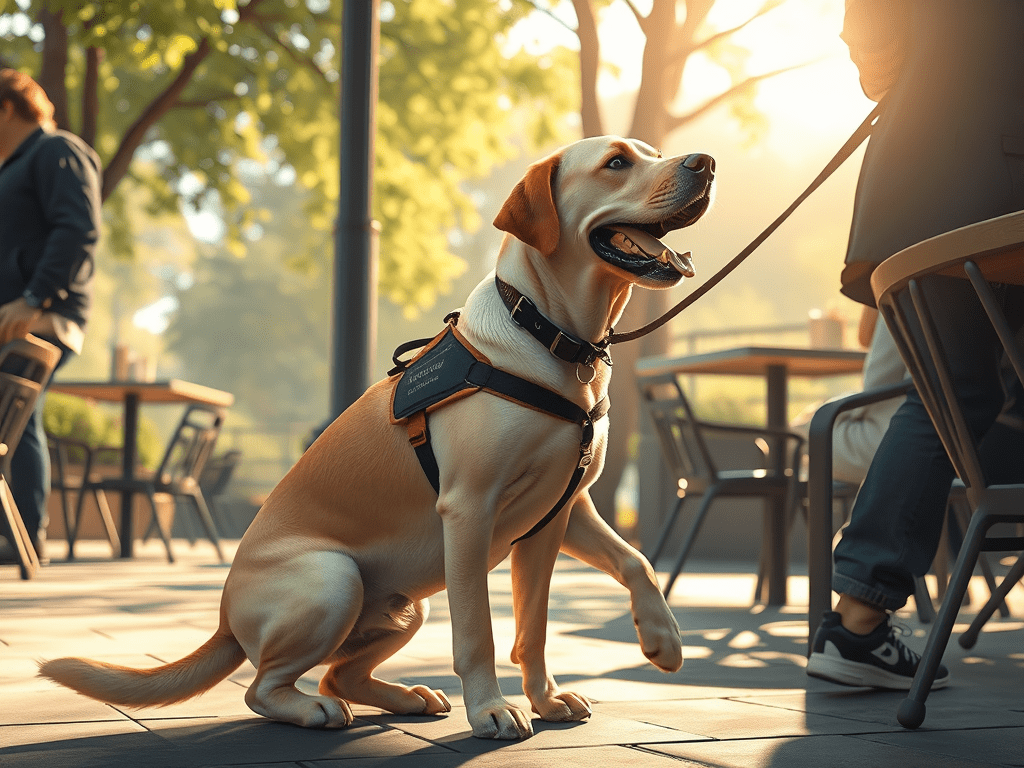
Service dogs undergo rigorous training to learn how to assist their handlers with specific needs. Here’s a breakdown of how they learn to take care of their handlers:
Training Process
- Breeding and Socialization: Service dogs are often bred specifically for their temperament, intelligence, and loyalty. They’re socialized from an early age to interact with people, other animals, and various environments.
- Basic Obedience Training: Service dogs learn basic obedience commands, such as “sit,” “stay,” “come,” and “walking on a leash.”
- Task-Specific Training: Service dogs receive specialized training to perform specific tasks to assist their handlers. For example, a service dog for a person with diabetes might learn to detect changes in blood sugar levels.
- Public Access Training: Service dogs learn to navigate public spaces, such as stores, restaurants, and public transportation, while remaining focused on their handler.
How Service Dogs Know When to Assist
- Cues and Commands: Service dogs learn to recognize specific cues and commands from their handlers, such as a verbal command or a hand signal.
- Contextual Clues: Service dogs learn to recognize contextual clues, such as changes in their handler’s behavior, body language, or physical condition.
- Intuition and Bonding: Service dogs develop a strong bond with their handlers, which enables them to sense their handler’s needs and emotions.
Examples of Service Dog Tasks
- Mobility Assistance: Service dogs can assist people with mobility impairments, such as opening doors, picking up items, or providing balance support.
- Medical Alert and Response: Service dogs can detect medical conditions, such as seizures, low blood sugar, or allergic reactions, and respond accordingly.
- Mental Health Support: Service dogs can provide emotional support and comfort to people with mental health conditions, such as post-traumatic stress disorder (PTSD).
In summary, service dogs learn to take care of their handlers through a combination of training, socialization, and bonding. Their ability to recognize cues, contextual clues, and intuition enables them to provide tailored support and assistance to their handlers.
Hena’s Blog For Paws © 2019 by Hena Osman is licensed under CC BY 4.0
 Hena's Blog For Paws
Leave a comment