
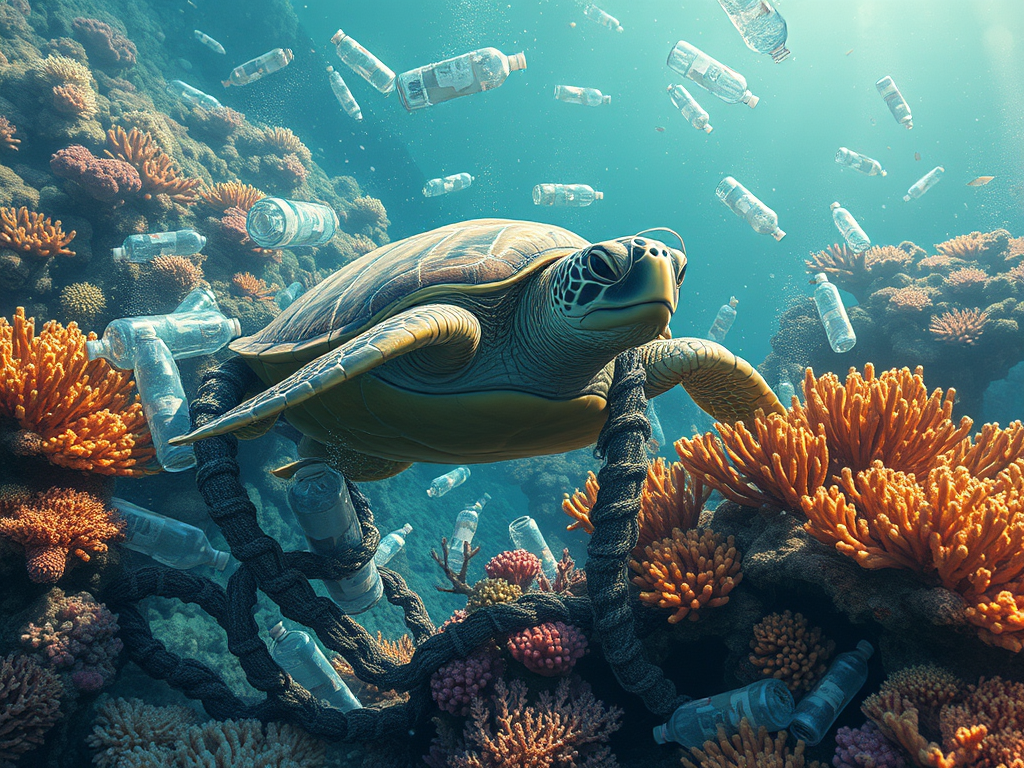
Marine life includes all organisms living in oceans and seas. It plays a vital role in maintaining the balance of our planet’s ecosystem. However, human activities have significantly disrupted this delicate balance. These activities put countless marine species at risk. They also cause long-term damage to underwater habitats.
One of the most harmful impacts comes from plastic pollution. Millions of tons of plastic waste enter the oceans every year. This pollution chokes sea creatures like turtles, birds, and fish. They mistake it for food. Entanglement in plastic items like fishing nets and rings often results in injuries or death for many marine animals. Microplastics are tiny plastic fragments. They are even more dangerous because they enter the food chain. They affect marine biodiversity at a microscopic level.
Another major threat is overfishing. Humans catch fish at rates faster than they can reproduce, leading to the collapse of fish populations. This not only disrupts the marine food chain but also affects coastal communities that rely on fishing for their livelihood. Moreover, practices like bottom trawling damage the seafloor, destroying coral reefs and habitats for countless marine organisms.
Chemical pollution from industries and agriculture also contaminates the ocean. Runoff contains pesticides, fertilizers, and heavy metals. These substances cause “dead zones.” In these areas, oxygen levels are too low for marine life to survive. Oil spills, though accidental, have devastating effects on marine ecosystems, coating animals in toxic sludge and poisoning their environment.
Climate change, largely driven by human activities, is warming ocean waters and melting polar ice. As temperatures rise, coral reefs undergo bleaching, which can lead to their death. Many marine species are forced to migrate to cooler waters, disturbing the natural balance. Ocean acidification, another result of increased carbon dioxide, weakens the shells of shellfish and disrupts marine reproduction.
In conclusion, human actions have a profound and often negative impact on marine life. While awareness is growing, urgent steps must be taken to reduce pollution. It’s essential to regulate fishing and combat climate change to preserve the oceans for future generations. Sustainable living and stronger environmental policies are key to healing and protecting marine ecosystems
Hena’s Blog For Paws © 2019 by Hena Osman is licensed under CC BY 4.0
 Hena's Blog For Paws
Leave a comment