
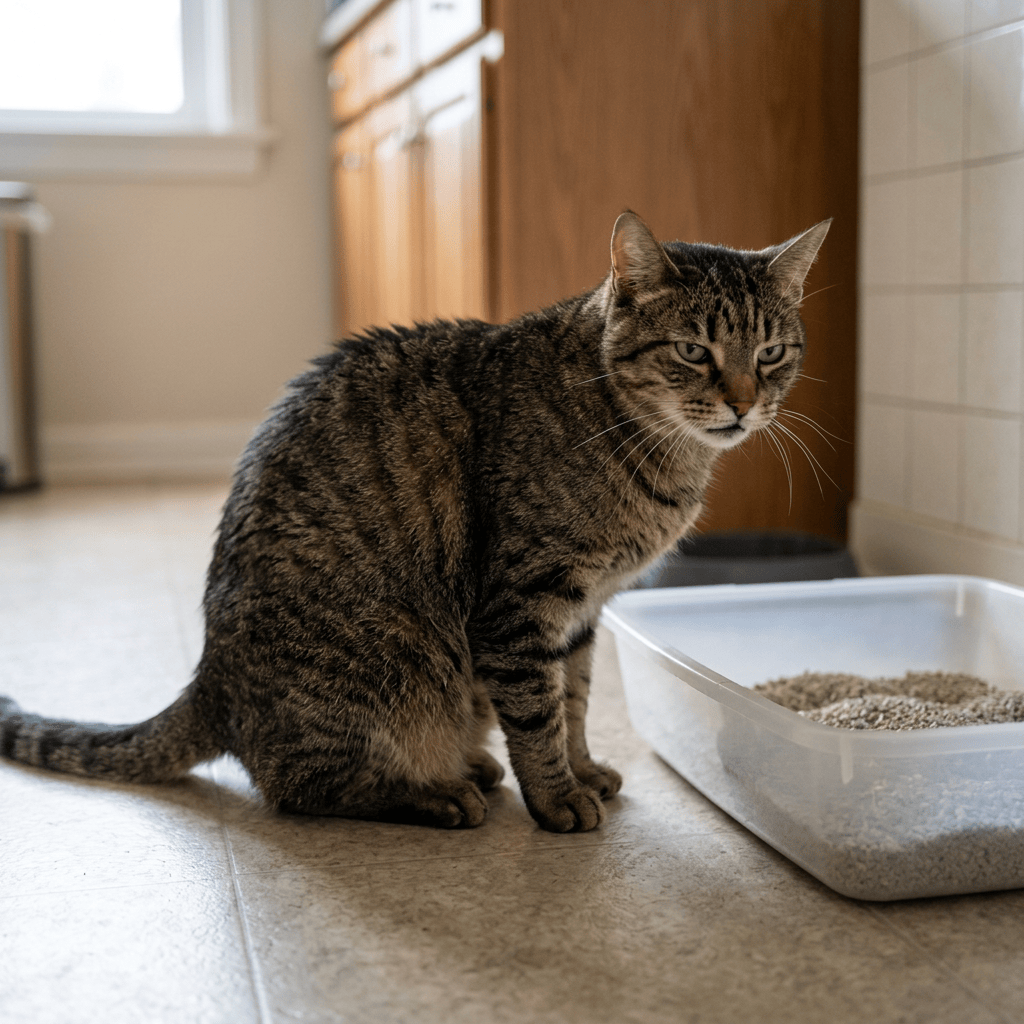
If your cat is suddenly visiting the litter box every few minutes, crying, or having accidents outside the box, it is easy to assume UTI. In cats, the story is a little more complicated. True bacterial urinary tract infections are actually uncommon in young, healthy cats. What most cats have is called FLUTD, feline lower urinary tract disease. The most common part of that is FIC, feline idiopathic cystitis, which means inflammation of the bladder without bacteria, often triggered by stress, dehydration, and routine changes.
A healthy bladder has defenses that keep bacteria out. When those defenses weaken, problems start:
1. Low water intake: Cats that eat only dry food and drink little produce very concentrated urine. That irritates the bladder lining.
2. Stress and environment: Moving, new pets, loud homes, dirty or shared litter boxes, boredom. Stress affects the bladder in cats more than most people realize.
3. Physical factors: Bladder crystals or stones, being overweight and inactive, older age, diabetes or kidney disease, and being female can raise risk for true bacterial infection.
4. Holding urine too long: A box that is not clean, too few boxes, or a box in a noisy area makes cats avoid it.
Therefore, treatment needs a checkup first:
Step 1: Get a diagnosis. Your vet will do a urinalysis to look at concentration, blood and crystals, and usually a urine culture to confirm if bacteria are really there.
Step 2: Treat the underlying cause.
If bacteria are present, your vet may prescribe a full course of antibiotics based on the culture, plus pain relief if needed. If it is FIC or crystals, antibiotics will not help. Treatment then focuses on increasing water, pain control, prescription urinary diets if recommended, and stress reduction.
Step 3: Prevent the next episode.
- Feed more wet food and offer fresh water in several spots. A fountain helps many cats drink more.
- Keep one litter box per cat plus one extra, scooped daily.
- Keep a calm routine, play sessions, hiding spots and vertical space.
- Do not stop treatment early, and ask about a recheck urine test.
When it is an emergency
If your cat is straining but producing no urine, vomiting, extremely tired, or licking constantly, go to emergency right away. A urinary blockage, especially in male cats, can become life threatening within hours.
Hena’s Blog For Paws © 2019 by Hena Osman is licensed under CC BY 4.0


Leave a Reply