
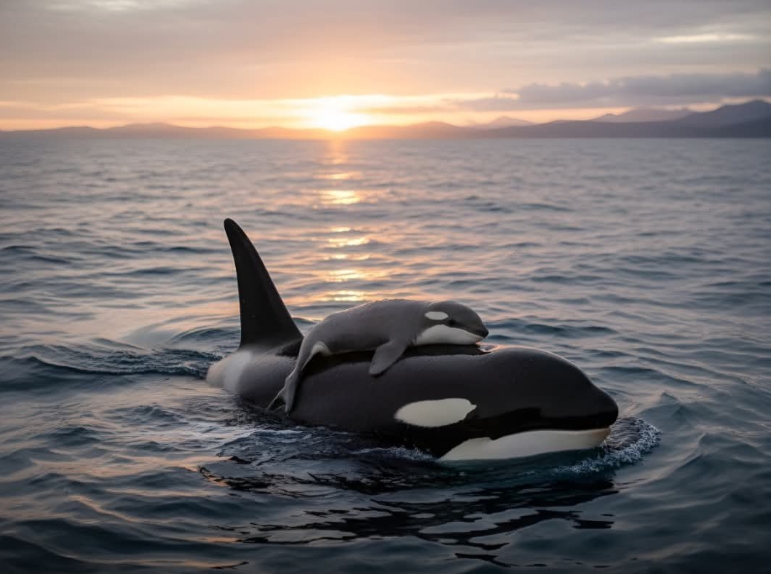
hen an orca mother carries her dead calf for days. Sometimes, she carries it for weeks. It’s an expression of deep grief and maternal attachment. Orcas are highly intelligent and emotionally complex beings with strong social bonds, especially between mothers and their calves.
Here’s why this behavior happens:
- Emotional Bond and Grief:
The bond between a mother orca and her calf is incredibly strong. Calves depend on their mothers for years, so the death of a newborn is devastating. Carrying the body is believed to be a way for the mother to process her loss. This act is similar to how humans mourn. - Refusal to Let Go:
Many scientists interpret this as a manifestation of denial or difficulty in accepting the death. The mother instinctively continues to nurture and protect her calf, even after it has died. - Social Learning and Empathy:
Orcas live in tight-knit family pods. Other members sometimes assist the grieving mother. They swim close to her, suggesting that these animals are capable of empathy and emotional support. - Symbol of Intelligence and Awareness:
Such behavior indicates a high level of self-awareness and emotional intelligence. These are qualities once thought to be unique to humans.
Tahlequah (J35) is a well-known example. This Southern Resident orca carried her dead calf for 17 days. She traveled across 1,000 miles in 2018. Scientists called it a “tour of grief.” It is a heartbreaking demonstration that orcas deeply mourn their young. This shows how much emotion and consciousness exists within the animal world.
Hena’s Blog For Paws © 2019 by Hena Osman is licensed under CC BY 4.0
 Hena's Blog For Paws
Leave a comment