
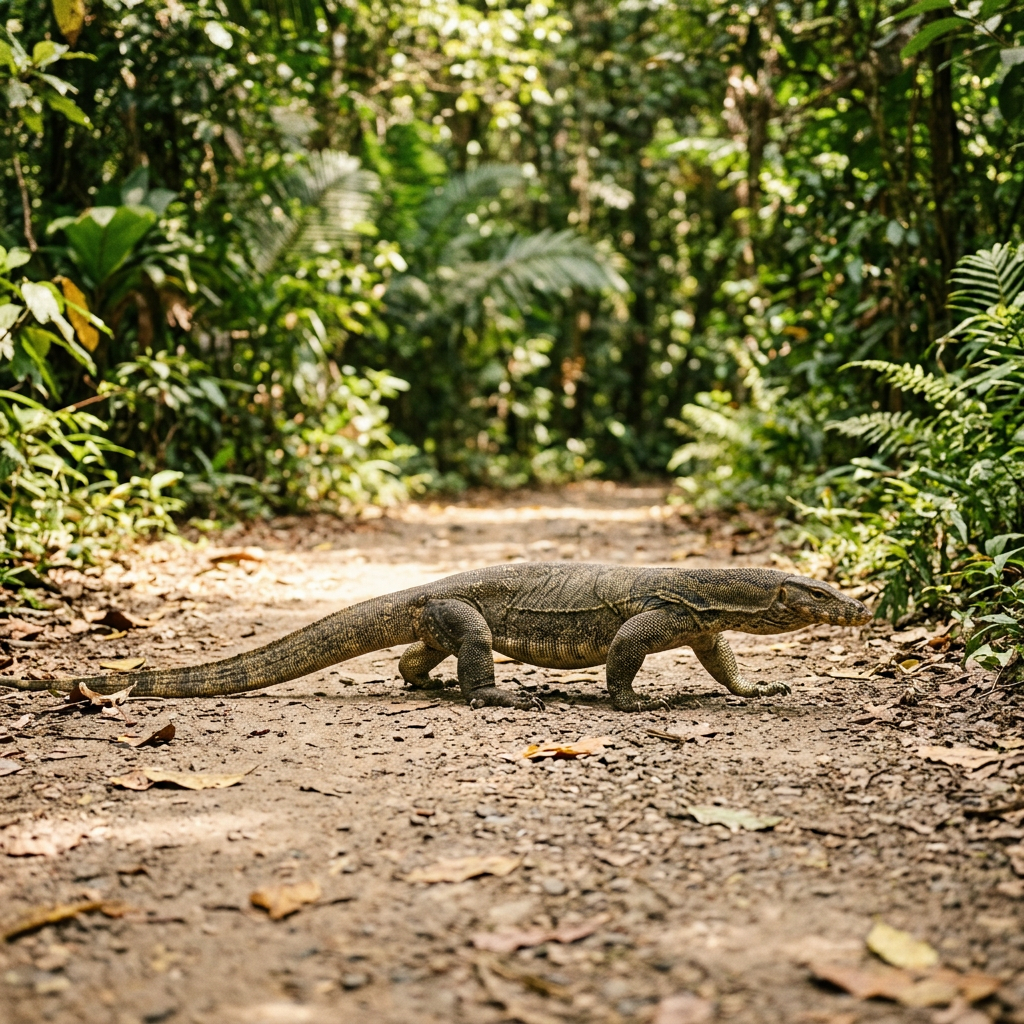
Monitor lizards are not generally harmful to humans — they are shy and will run away long before you get close.
In and around Karachi you mostly see the Bengal monitor and Desert monitor. They are not aggressive hunters of people.
Here is when they can cause harm:
1. If they are cornered or handled
They will defend themselves. A bite can be quite painful because they have sharp teeth and very strong jaws, and they can give you a hard whip with their tail and scratch with their claws. The wound can get infected easily because of bacteria in their mouth.
2. Venom
Most monitors people meet in Pakistan are not considered venomous in a medically significant way. The larger species like Komodo dragons and some tree monitors do have mild venom glands that can cause swelling, pain, and slow blood clotting, but it is not life-threatening for a healthy adult. For the species in Sindh, the main risk from a bite is infection, not venom.
3. Bacteria
Like many reptiles, they can carry Salmonella. So you should not touch one, let pets attack it, or let it walk over kitchen surfaces.
They are actually helpful to have around. They eat rats, mice, insects, snakes, and dead animals, so they keep rodent numbers down.
What to do if you see one
- Don’t approach, feed, or try to catch it. Keep a good distance and it will usually leave on its own.
- Keep pets away. Dogs often get bitten trying to chase them.
- If it is inside your house or garage: Don’t try to kill it — they are protected wildlife in Pakistan. Open a door to give it an exit, keep people in another room, and call the Sindh Wildlife Department. You can also splash a little water from a distance to encourage it to move.
- If someone gets bitten: Wash the wound immediately with soap and lots of running water for 5 minutes, apply antiseptic, and go to a clinic. You may need a tetanus shot and antibiotics. You don’t need anti-venom for local monitors.
If you are seeing them often around your home, it usually means there is easy food — open trash, fallen fruit, or a lot of rats. Securing garbage bins and clearing brush piles helps them move on.
Have you seen one in your house or outside?
Hena’s Blog For Paws © 2019 by Hena Osman is licensed under CC BY 4.0


Leave a Reply