
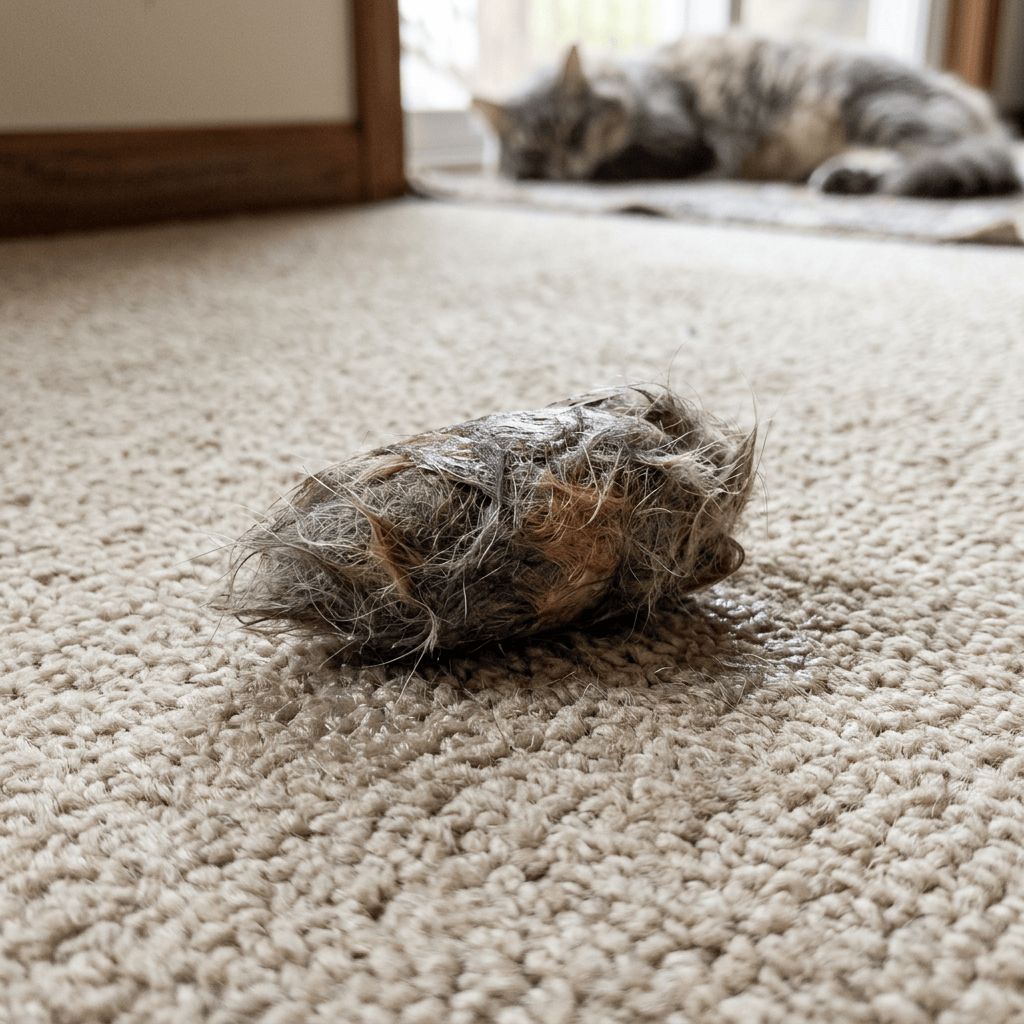
Cats get hairballs because they are very fastidious groomers — and that rough tongue is the culprit.
When your cat grooms, those tiny backward-facing barbs on her tongue called papillae act like a comb and pull loose, dead hair out. She swallows most of it. Most hair passes right through the digestive tract and comes out in the stool. But some hair stays in the stomach and clumps together with saliva and stomach juices into what we call a trichobezoar — a hairball.
Long-haired cats, cats who shed a lot seasonally, cats who over-groom due to stress, allergies, or skin pain, and kittens who are just learning to groom efficiently get them more often.
A normal hairball episode looks like this: a cat crouches low, gags / retches a few times with that classic “hack-hack-hack” sound, and then brings up a damp, tubular clump of hair. It’s unpleasant but not choking — air is still moving.
Choking on a hairball is rare, but it can happen if a large hairball gets stuck in the throat or a cat inhales while retching. Here’s how to tell the difference:
Hairball cough / vomiting: Noisy, productive retching, cat is alert between tries, can still breathe, paws at mouth a little.
True choking / airway obstruction: Silent or wheezy effort, open mouth, blue or pale gums, frantic pawing at mouth, drooling, collapsing, no sound coming out. This is an emergency.
How to help prevent Hairballs:
- Brush daily. This is #1. You remove the hair before she swallows it. For long-hairs in shedding season, twice a day helps. Since you have a paws blog, you know a good slicker brush and a de-shedding comb make a huge difference.
- Hydration + fiber: Hair moves better through a well-hydrated gut. Keep fresh water in multiple places, consider a water fountain, and add some wet food to the diet. A little added fiber — many vets recommend plain canned pumpkin (1 tsp) — helps, but check with your vet first.
- Hairball-formula food or treats: These have extra fiber and fatty acids to improve skin health and help hair pass through. Don’t over-supplement.
- Reduce over-grooming: If she’s grooming excessively, look for stress triggers, fleas, or skin allergies. Feliway diffusers, play sessions, and regular flea prevention help.
- Never use scissors to cut out mats — you can nick skin. Get mats professionally removed; mats increase swallowing of clumps.
- Get to a vet immediately after, even if she seems better — the throat can be swollen or irritated.
Go to the vet right away if you see:
- Hairballs more than once a week, or no hairballs but constant retching
- Constipation, diarrhea, loss of appetite, lethargy after retching
- Hairless patches from over-grooming
- Any true choking episode, even if resolved
A quick vet check can rule out inflammatory bowel disease or skin allergies that make hairballs much more frequent.
Hena’s Blog For Paws © 2019 by Hena Osman is licensed under CC BY 4.0


Leave a Reply