
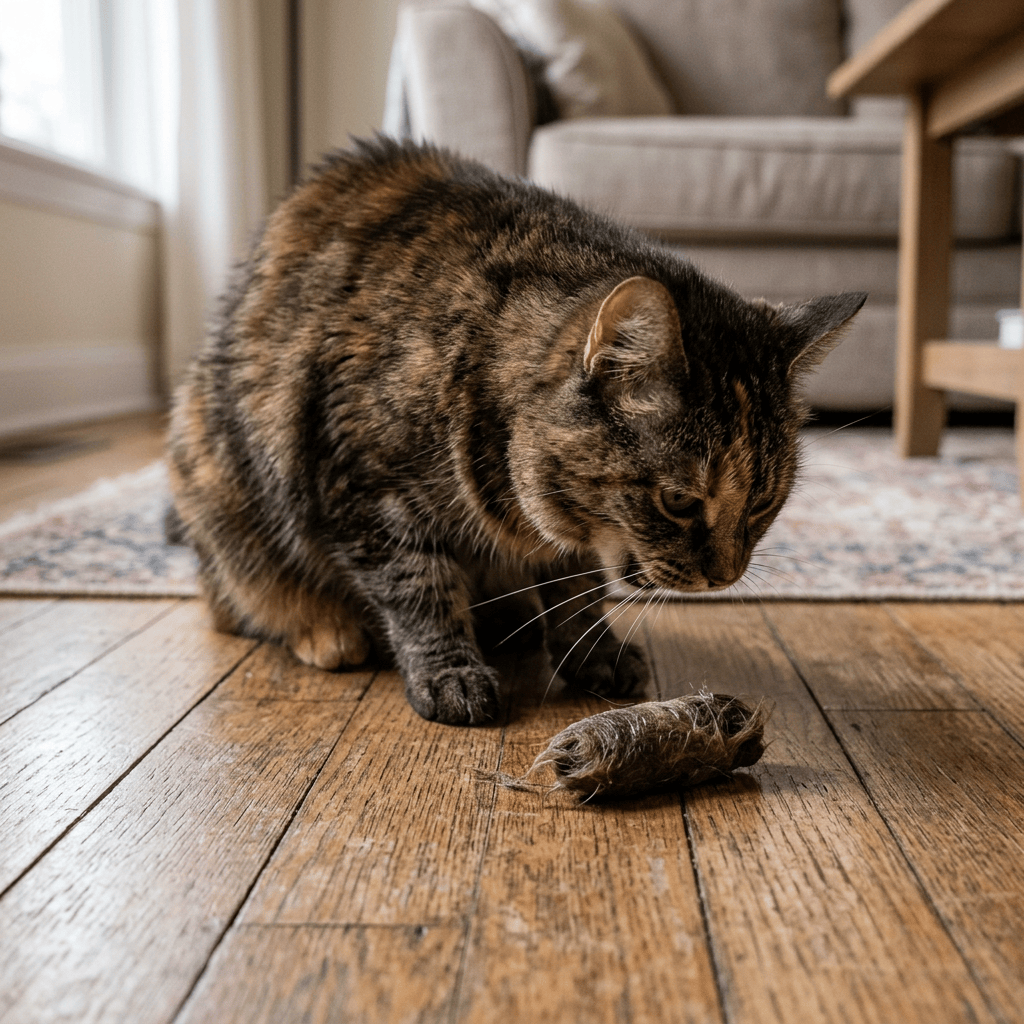
In cats, a hairball is exactly what it sounds like — a clump of swallowed hair that forms inside the stomach.
Here’s what happens step-by-step:
1. Grooming
A cat’s tongue is covered in tiny backward hooks called papillae. They work like a comb. Every time your cat grooms, it pulls out loose, dead hair and swallows it. They can’t spit it out.
2. Swallowing
Most of that hair is tiny enough to go through the stomach and intestines and come out in the poop. You’d never even notice it.
3. Build-up
If your cat is shedding a lot, has long hair, or is over-grooming from stress/allergy, more hair goes in than can pass through. In the stomach, the hair mixes with stomach acid, food and mucus. Hair doesn’t digest, so it mats together into a wet, tube-shaped clump — what vets call a trichobezoar.
4. The hack
When the clump gets too big to move into the intestines, the stomach gets irritated. The cat’s body tries to get rid of it by vomiting. That’s the loud hacking, retching, hunched posture you see — then the hairball comes up. It often looks more like a wet sausage of hair than a round ball because it was squeezed through the esophagus.
Why some cats get more than others
- Long-haired breeds: Persian, Maine Coon, etc.
- Shedding season: spring and fall
- Over-grooming: boredom, anxiety, skin allergies, fleas
- Low fiber / low water: hair moves slower through the gut
- Older or less active cats: gut motility slows down
Is it normal?
1-2 hairballs a month in a healthy cat that eats, poops, and plays normally = usually okay.
It’s not normal if:
- it happens weekly or suddenly much more often
- your cat retches a lot but nothing comes up
- you see constipation, diarrhea, loss of appetite, weight loss, lethargy, or belly pain
- the vomit is liquid/food without hair most of the time — that’s vomiting, not hairballs
Frequent hairballs can mean the gut isn’t moving well, or there’s an underlying skin or intestinal issue, so a vet check is worth it.
What actually helps reduce them
- Brush regularly: short-hair 3-4x/week, long-hair daily. This is the single biggest thing.
- More water + play: keeps the gut moving
- Hairball or high-fiber diet: helps push hair through
- Treat fleas / allergies: stops excess licking
- Enrichment: scratching posts, toys, window seats to reduce stress-grooming
Hena’s Blog For Paws © 2019 by Hena Osman is licensed under CC BY 4.0


Leave a Reply